About us

The vision behind our work and the people shaping the future of social-emotional education

Methodology

The research and the practice behind every program we run

Work with us

Give your time, grow a seed of hope

Partners & sponsors

The generous donors who make hope possible

Our impact Ten years of measurable change in young people's lives
Giving back locally Giving back globally
Join the Learning Hub

Children grow differently when they experience safety before shame.

Connection before correction. Belonging before performance. A trauma-informed pathway that moves young people from survival toward safety, and from safety toward contribution.
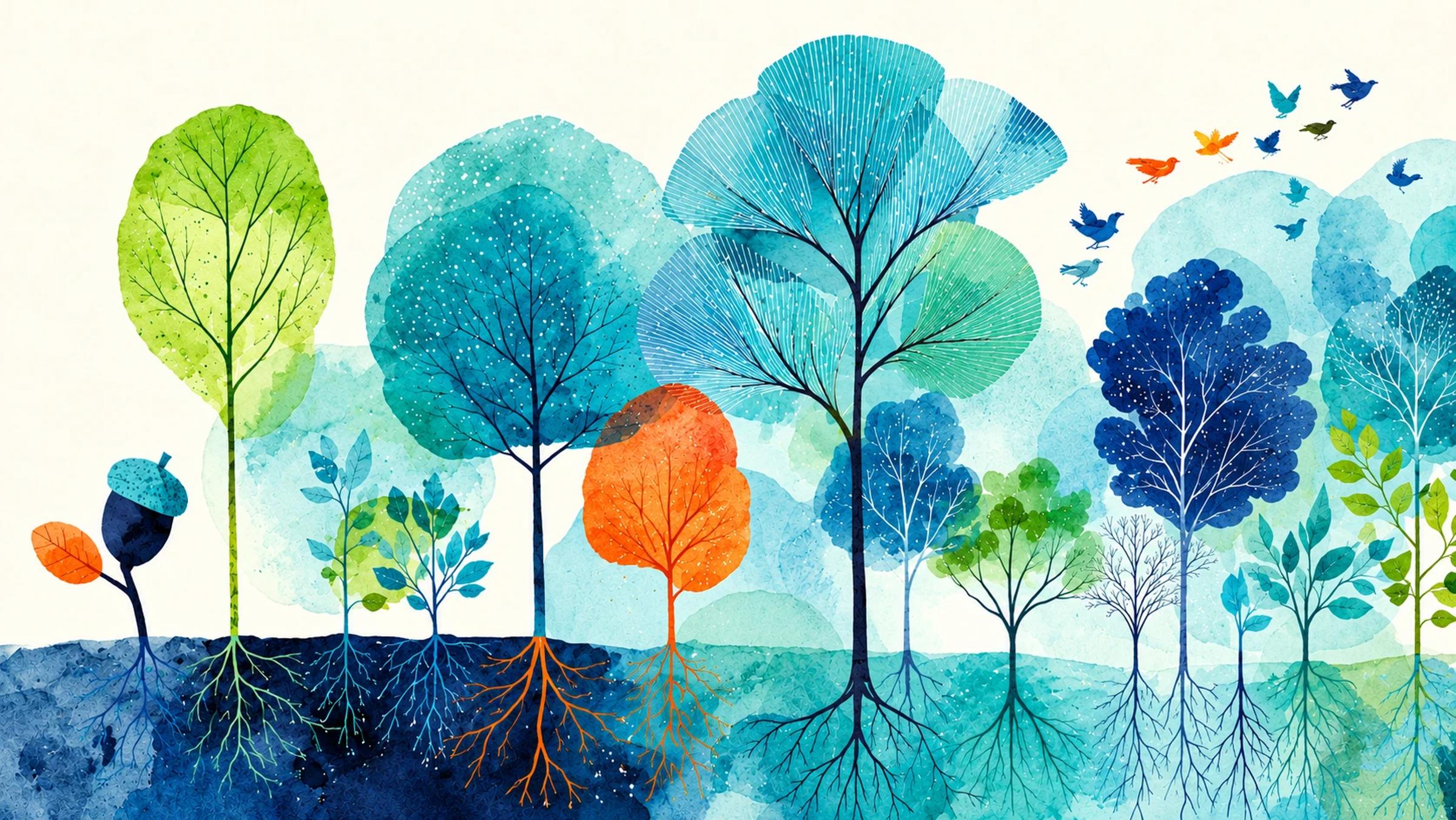
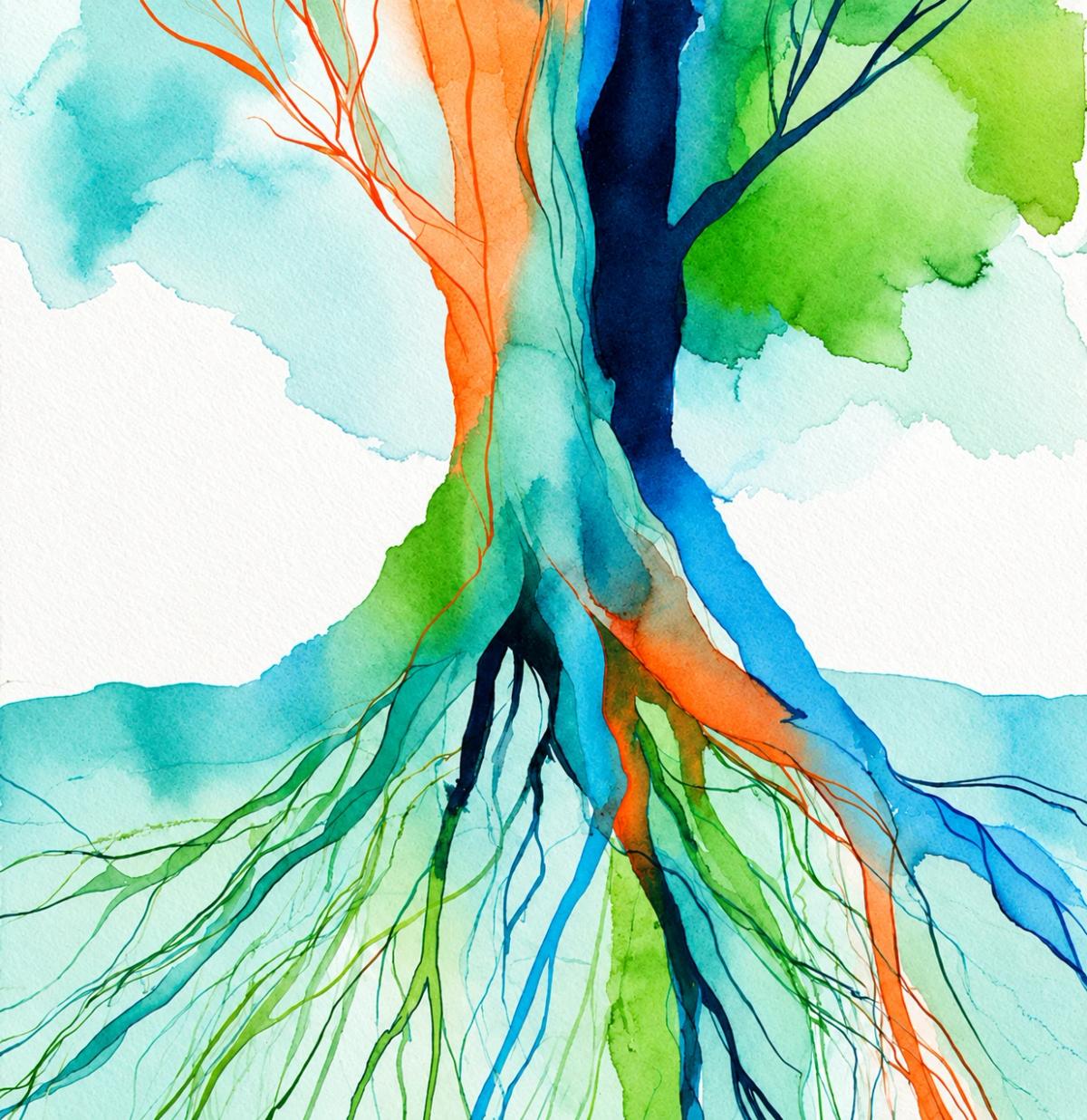
Watercolor illustration of a forest of trees of every age, rooted side by side

A framework that emerged through listening

Across classrooms, refugee camps, orphanages, and community programs, we kept seeing the same thing. Children changed in similar ways when certain conditions were present. Not because their stories matched, but because human beings share the same emotional and relational needs.

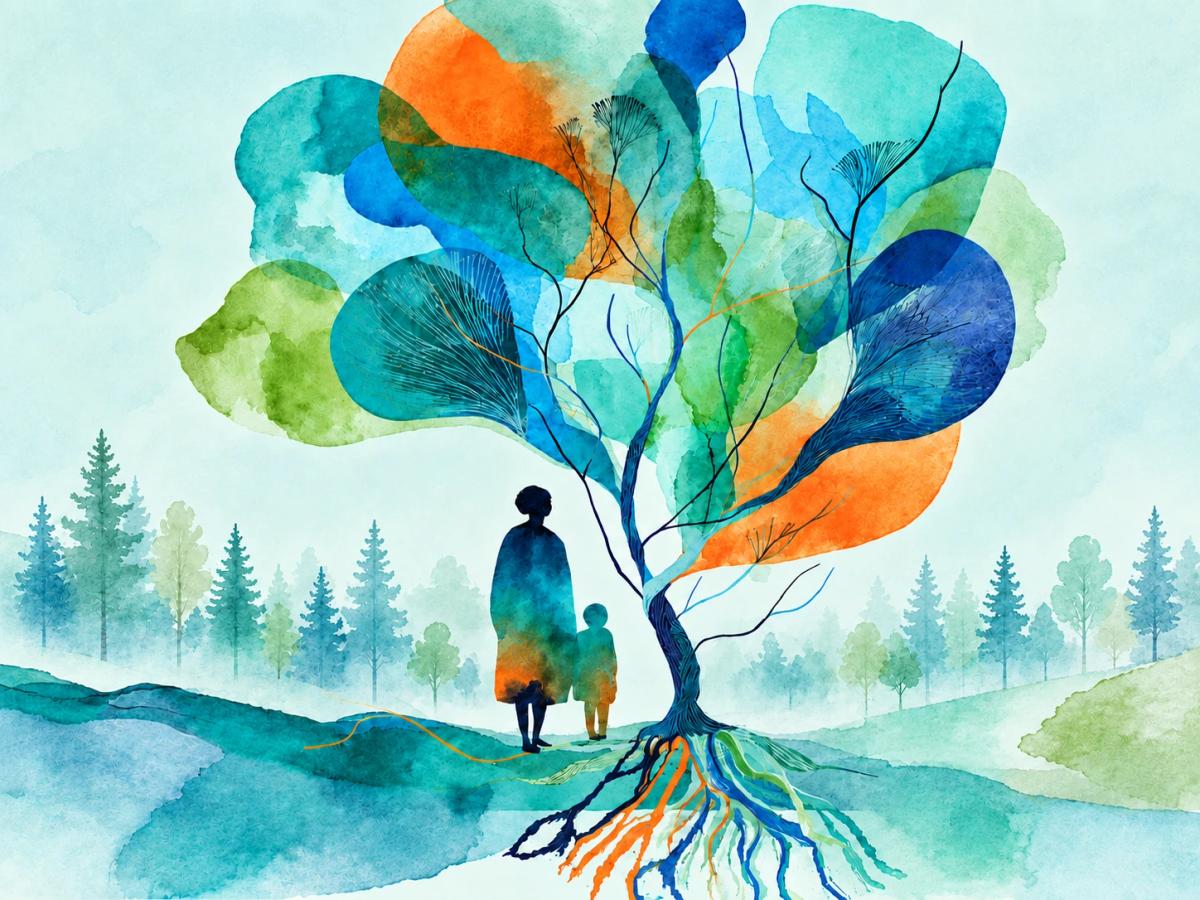
Those repeated observations slowly formed a pathway. We came to understand it through the metaphor of a tree.
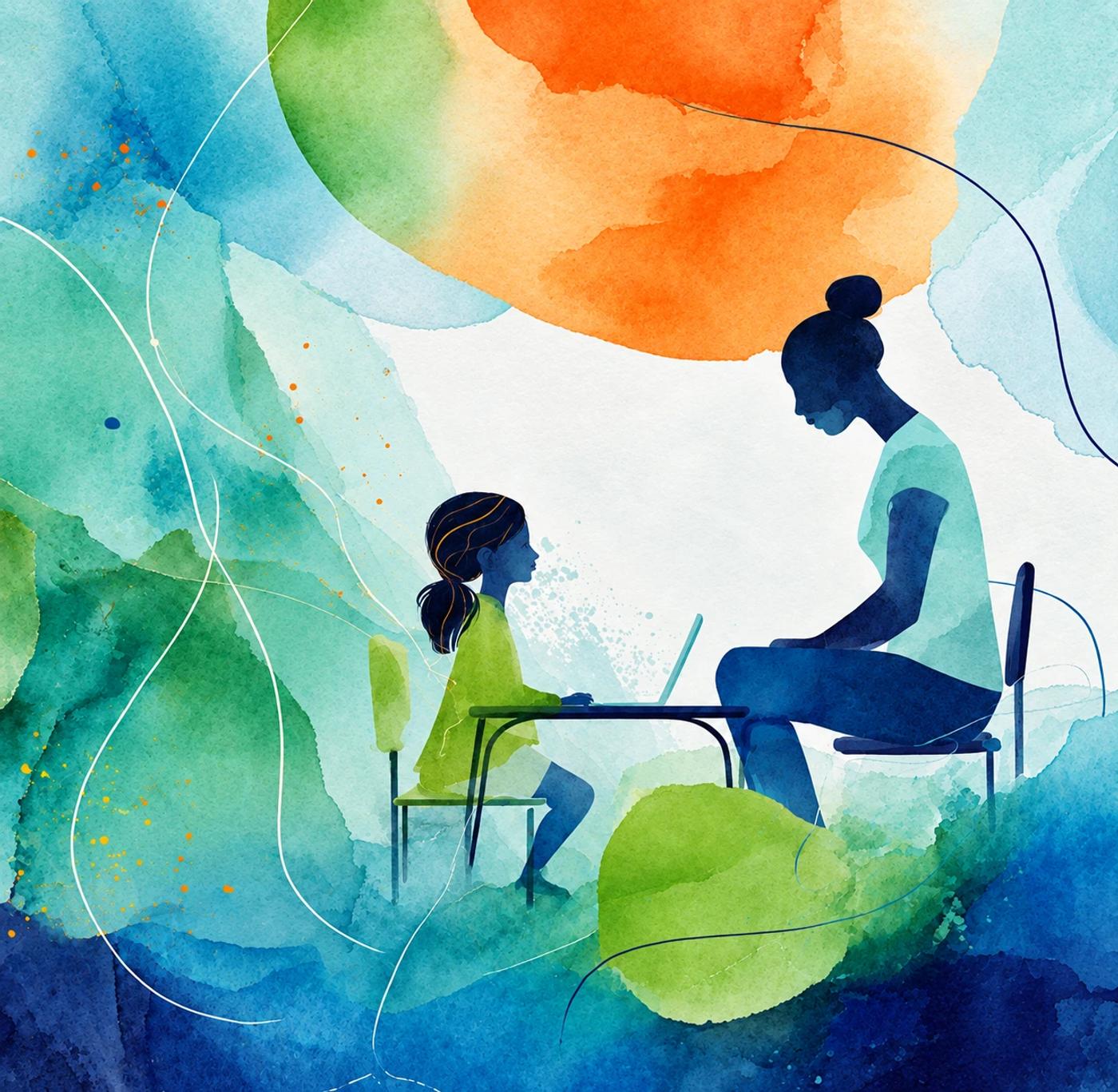
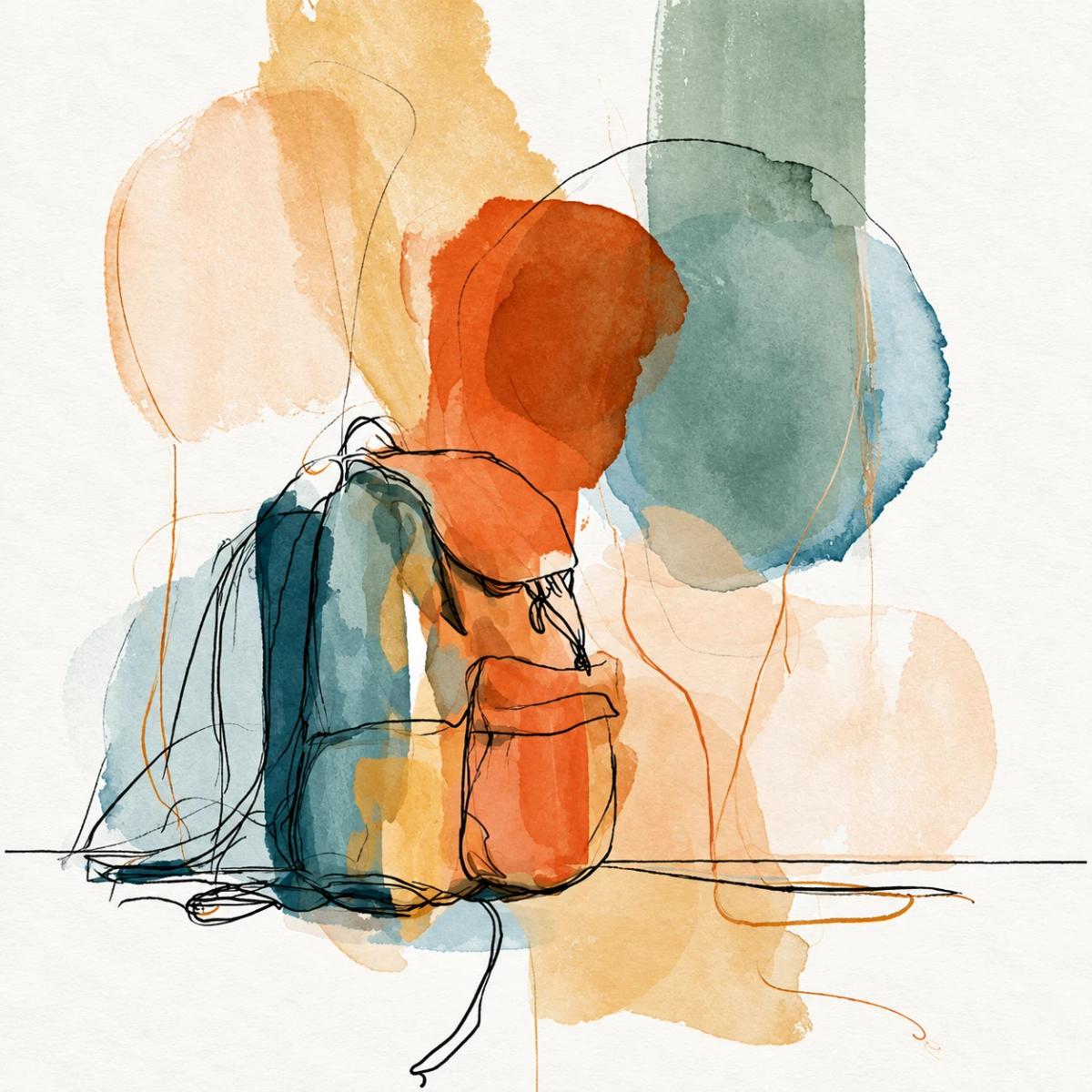
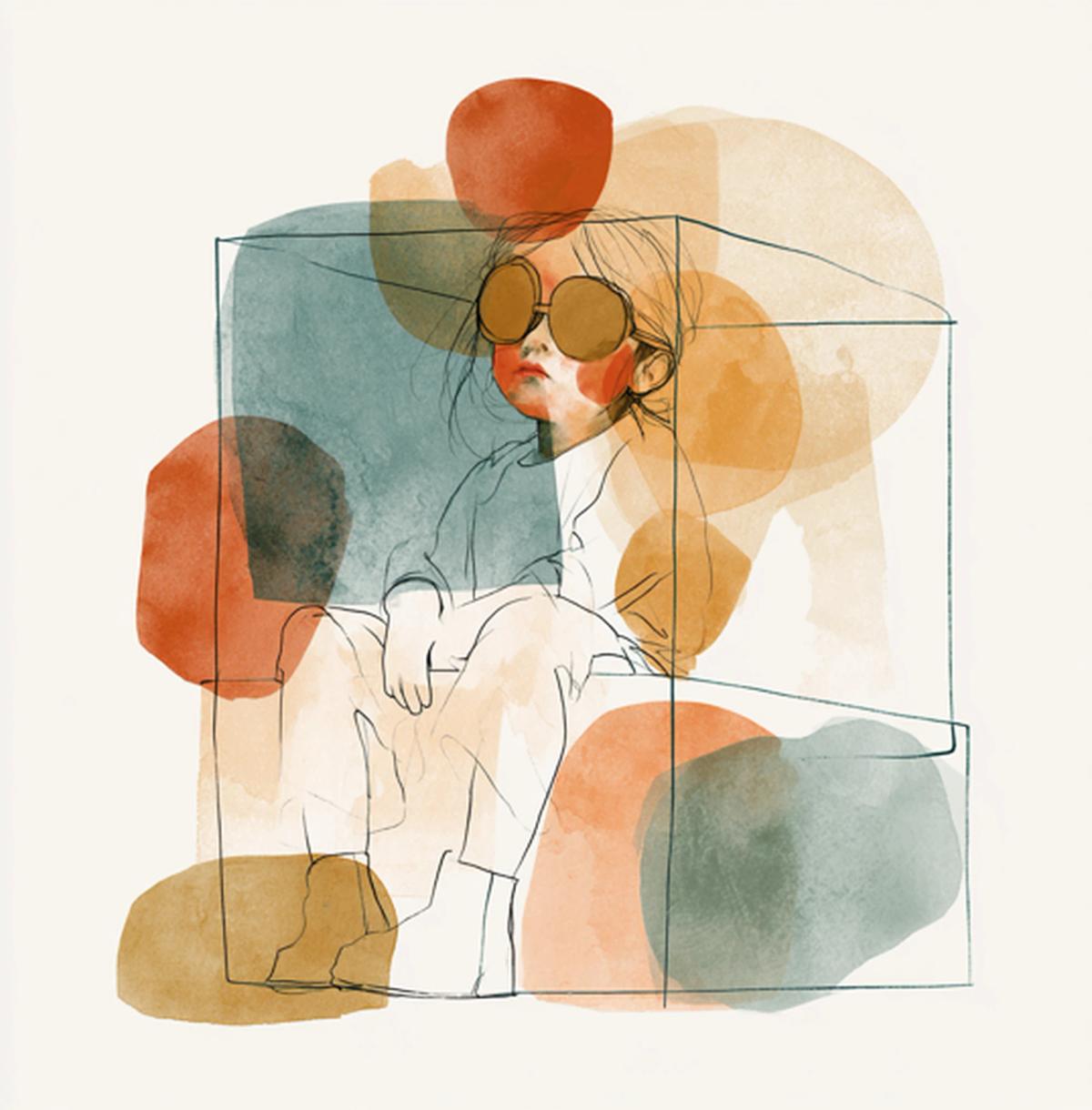
Watercolor illustration of an adult and a child sitting together

Every child carries a seed.

Inside it live gifts, curiosity, creativity, dignity, and the capacity to contribute. When a child is carrying stress or fear, most of their energy goes to protection instead of growth. The work of the adults around them is to create the conditions where that seed can grow.

Rooted in safety. Growing in relationship. Reaching toward a better world, together.

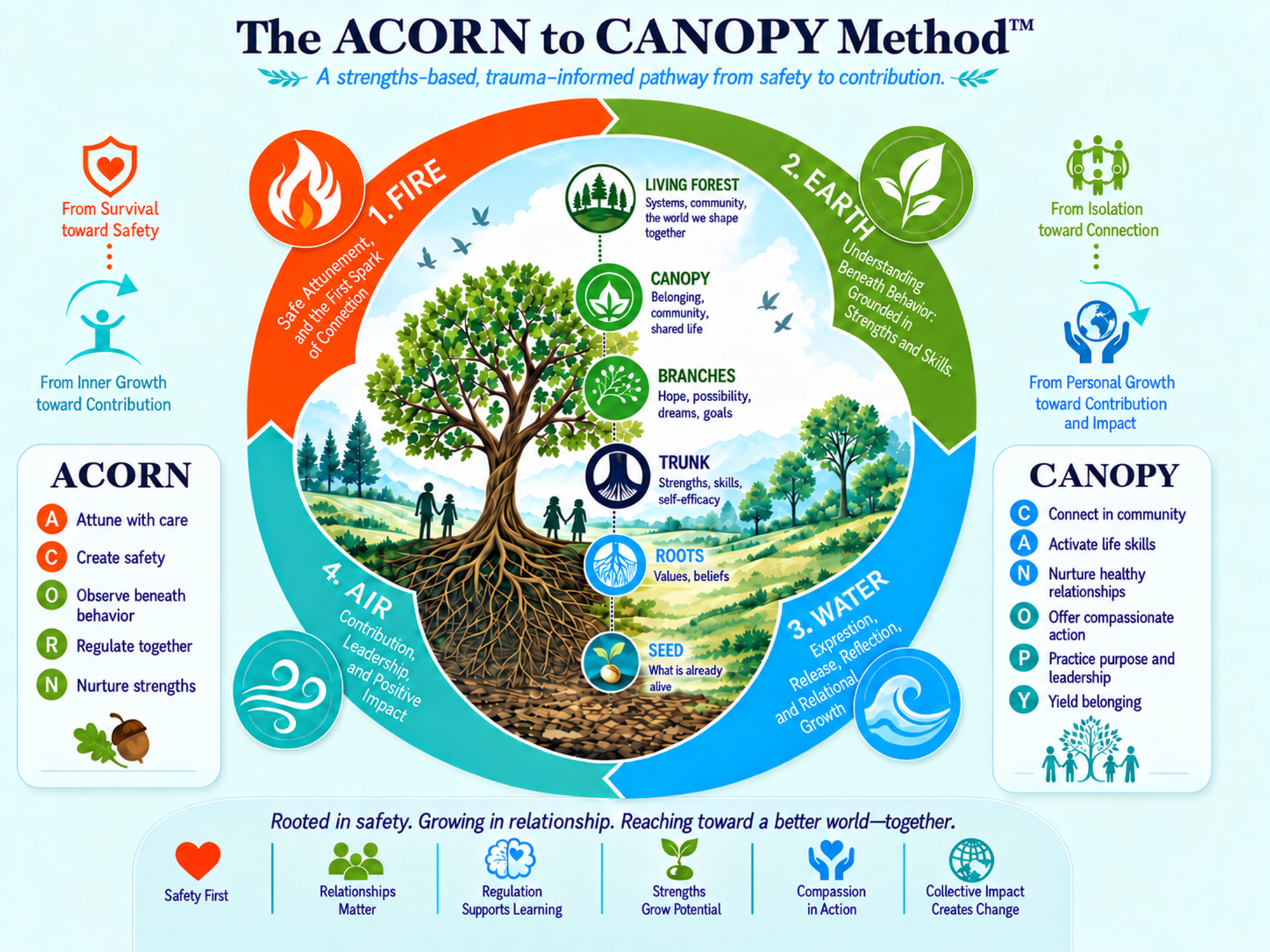
The Acorn to Canopy Method diagram: a strengths-based, trauma-informed pathway from safety to contribution. Four elements form a circle around a tree: 1. Fire, safe attunement and the first spark of connection; 2. Earth, understanding beneath behavior, grounded in strengths and skills; 3. Water, expression, release, reflection and relational growth; 4. Air, contribution, leadership and positive impact. Inside the circle, a tree shows six layers from the seed up: seed (what is already alive), roots (values, beliefs), trunk (strengths, skills, self-efficacy), branches (hope, possibility, dreams, goals), canopy (belonging, community, shared life), and the living forest (systems, community, the world we shape together). On the left, ACORN: attune with care, create safety, observe beneath behavior, regulate together, nurture strengths. On the right, CANOPY: connect in community, activate life skills, nurture healthy relationships, offer compassionate action, practice purpose and leadership, yield belonging. Along the sides: from survival toward safety, from inner growth toward contribution, from isolation toward connection, from personal growth toward contribution and impact. At the bottom: rooted in safety, growing in relationship, reaching toward a better world together, with six principles: safety first, relationships matter, regulation supports learning, strengths grow potential, compassion in action, collective impact creates change.

How the pathway moves

  1. Fire Safety and the first spark of connection

    Growth begins with safety. Before a child can reflect, learn, or regulate, they need to feel seen, welcomed, and emotionally held. Adults become the calm presence that helps hope replace fear.

    • Attune with care
    • Create safety
  2. Earth Understanding beneath behavior

    We ask what a child may be carrying, not only what they are doing. Children reconnect with their emotions, strengths, values, and identity, and roots begin to hold.

    • Observe beneath behavior
    • Regulate together
    • Nurture strengths
  3. Water Expression and relational growth

    What has been held inside begins to move. Through art, music, movement, storytelling, and play, children express what words alone cannot carry, and isolation turns into connection.

    • Connect in community
    • Activate life skills
    • Nurture healthy relationships
  4. Air Contribution, leadership, and impact

    Children discover they are contributors, not only recipients of care. They identify needs in their community, build plans, and see that their voice and choices matter.

    • Offer compassionate action
    • Practice purpose and leadership
    • Yield belonging

Helping children heal and grow is never only about the child. It is also about the emotional ecosystems we create together.

Watercolor illustration of an acorn hanging among drops of color

This page gives you four movements. The book gives you the whole tree.

Seed, Roots, Trunk, Branches, Canopy, Forest. The book follows a child's growth through all six stages, with the classrooms, camps, and families where this framework was formed, and the practices that helped adults respond differently. Written for anyone raising, teaching, or caring for young people.
Get the book
Discover EsperHope

A video game where young people build life skills by living them, then carry those skills into their own communities.